
Corey Harris, Alvin Youngblood Hart, Guy Davis — Fight On! True Blues Vol. 2

All that is needed is an acoustic guitar and a heart full of strife. Yet, somehow, in the proper hands, that seemingly simple pairing can best any stethoscope (or band) at listening in on the torment.
Such is Fight On! True Blues Vol. 2. No electricity. No accompanists. No doctoring. Nothing of the sort was required. Just an album of straight-up, unplugged, DIY, run-tape-and-beat-the-strings blues. Country blues, as known in some circles.
For 28 minutes, three hardline headliners—Corey Harris, Alvin Youngblood Hart, Guy Davis; all of whom were hailed as the young lions of acoustic blues but now assume seniority roles—alternate turns doing what they do best ever since their solo records began piling up in the 1990s: namely, working all by their lonesome. (Harris debuted with Between Midnight and Day; Hart lead with Big Mama’s Door; Davis went with Stomp Down Rider.) In all, Fight On! spreads over nine tracks; three apiece; with zero teaming up. To reinforce the degree of isolation, they’re not even in the same proximity, let alone the same studio, when recording: Virginia (Harris), Mississippi (Hart) and New York (Davis).

Given the modest setup and straightforward delivery, these performances could just as well have unfurled right before you. Eye-to-eye. Knee-to-knee. In your kitchen, beneath the moon, on a street corner, inside a backcountry shack.
Despite only having a vintage guitar plus their bare voice, each man’s manner of personal expression pinpoints their identity.
Alvin Youngblood Hart, for starters, is engagingly animated and tends to spontaneously fire off freeform spoken asides to deformalize the setting. Time together becomes looser, more in-the-
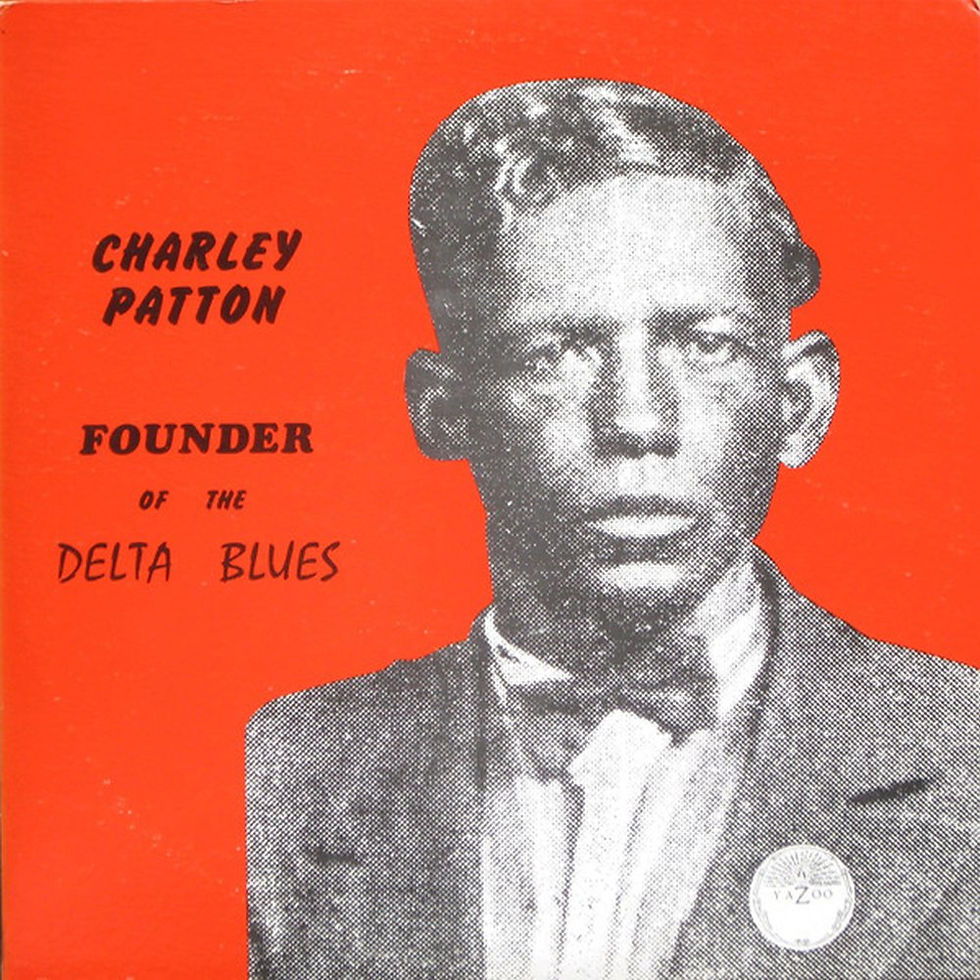
moment. “Screamin’ and Hollerin’ the Blues” is a prime example. Those three minutes are also textbook Delta. Actually, you couldn’t get any more definitively Delta than having come from Charley Patton, who struck a nerve with Robert Johnson, Tommy Johnson, and Son House, no less. Hart turns that same spark into a jolting sensation that deliberately bucks and staggers, lurching forward, shoved along all the more by percussive thumps on a makeshift drum: the body of that workhorse 1950s Sears Silvertone flattop guitar. You can practically feel Mississippi’s humid drench.
The beardy, 63-year-old Grammy winner stays in state, more or less, for his two other contributions. Because “Highway 61” has lit up many a pitch Mississippi night. James “Son” Thomas to the North Mississippi Allstars can vouch for that. Or when Fred McDowell was

showing off his bottlenecking genius. That was on a front porch in Como, in 1959. Hart, however, picked up his slideless rendition from direct collaborations with David “Honeyboy” Edwards, who, by ’59, had already migrated up to Chicago from Mississippi. Before that, though, he shared Delta days with Robert Johnson, right up to the night of the legendary murder. Alvin’s arrangement—a guitar moan intermittently pierced by a racked-harmonica’s sharp notes—could just as well have gurgled up from a pool of gloom in Tutwiler or Itta Bena.

As for “If The Blues Was Money,” its inspiration is said to have come from friend Henry “Mule” Townsend, a St. Louis bluesman who cut his first shellac disc in 1929 (for Columbia Records) and kept right on cutting records throughout the 1930s (a very fruitful decade for Townsend) and across (nearly) every subsequent decade, up to his passing in 2006. Yet so deeply brooding is Alvin’s homemade classic—a private hell fraught with two-timing, turpentine and the electric chair—that its drone also would not be out of place in Mississippi.
Corey Harris widens the scope. The beardy 57-year-old has amassed a pile of albums that not only include blues but also West African-tinted blues and even full-on reggae. Here, he brings a bellowing voice, an explorer’s spirit as well as the title track. Chock full of Biblical references, “We Are Almost Down to the Shore (Fight On)” was recorded in 1936, from behind the walls of the Virginia State Prison Farm, by Jimmie Strother. The veteran of Virginia’s medicine-show circuit banged out his version on a banjo; Harris instead plucks out his on a custom-built parlor guitar at a briskly rolling pace indicative of the Piedmont school of immaculate fingerpicking.
“What’s That I Smell,” an original, veers down a different road. Its motion is relaxed, another picked piece but one that fishtails with a jaunty wiggle. Its lyrics are wry, drawn from Harris’ nightly tenure at the Funky Butt, a now shuttered joint that sat adjacent to New Orleans’ Congo Square. Its singing is raspy, sometimes projecting into a holler. Their combination brings to mind 1970s Taj Mahal.
Gruff-throated Guy Davis, 73, is a Renaissance man: songster, Broadway actor, off-Broadway actor (portraying Robert Johnson in Robert Johnson: Trick the Devil), TV actor (One Life to Live). His three tracks are (largely) original.

When Davis’ Harmony Stella 12-string rumbles out “Everything I Got Is Done in Pawn,” a redesign of Elizabeth Cotten’s “Shake Sugaree,” who needs an amplifier or, for that matter, a band anyhow? The hulking guitar’s naturally resonant boom expands to fill the room with sobering sound. It’s the same method Blind Willie McTell—King of the Georgia blues—used to embed songs into walls back in the 1920s and ’30s. Here, the driving rhythm offers no slack, mowing down whatever is in its path. “See Me When You Can,” a dirge, drastically downshifts. Its bittersweet battle against the clock is caught every which way: in his singing that delivers weighted lines from the viewpoint of someone going down slow as well as in the empathetic guitar tolling underneath.

For all this glorious misery, they’re not men of constant sorrow, though. Corey, for example, beams with divine rapture when redeploying “I Belong to the Band,” one of the more vigorous numbers within Rev. Gary Davis’ gospel repertoire. His voice bursts like fireworks atop an articulate guitar chugging off a head of steam. Guy works on the opposite end of the spectrum. His own “Deep Sea Diver” fleshes out carnal exploits of a lover man. Read-between-the-lines innuendo offers some degree of discretion.
Fight On! True Blues Vol. 2 builds upon its precursor, 2013’s True Blues, which served as a live memento from when Harris, Hart and Davis joined a larger cavalcade for a series of onstage events spread from New York (Lincoln Center) to Los Angeles (House of Blues) and points in between. This time, distillation reaches the purest minimum: the electrifying power of one-man acoustic blues—raised to the power of three.
Label: Yellow Dog
Release date: 4/17/26
Label website: Yellow Dog Records.com
Reviewed by Dennis Rozanski


Comments