
Ten Years After — Cricklewood Green (2026 Deluxe Version)

Side 2, Track 2 is where the kingmaker, the blockbuster, the firebreather lived.
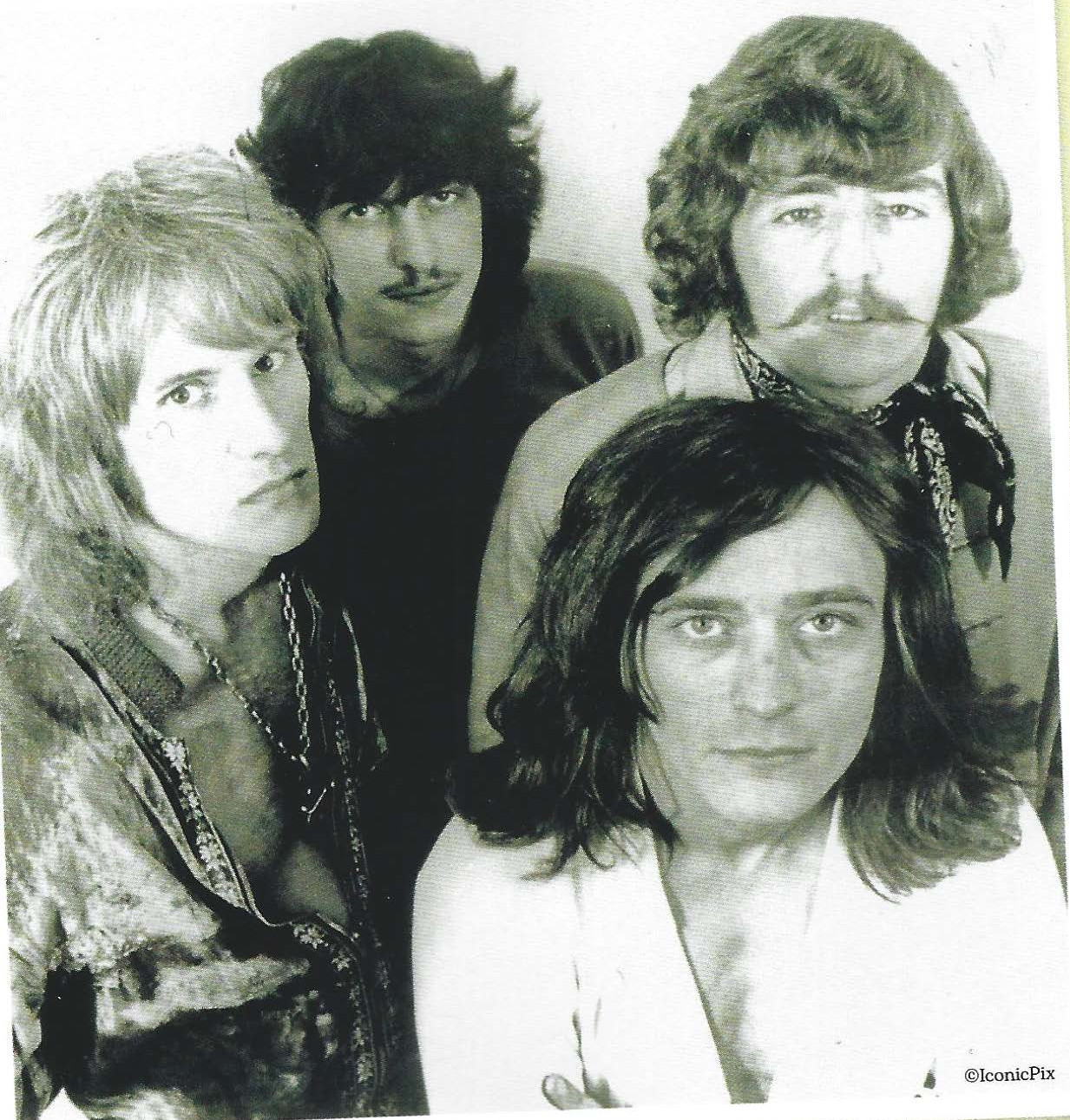
It begins, simply enough, with a meager, patterned and quite hummable handful of notes tolling out from an electric (and, before long, electrifying) guitar. A famous cherry-red Gibson ES-335 guitar, in fact. That wafting riff persistently cycles, exerting a mild hypnosis. But then sticks around for the duration, serving as the backbone off of which all the glorious uproar stems. Three wingmen join. Now, the four of them—singing guitar god Alvin Lee, bass beast Leo Lyons, Hammond organ wrangler Chick Churchill, and Ric Lee, thunder of the gods—convene to muscle the groove. Soon enough, the gentle stream turns into a raging flash flood.
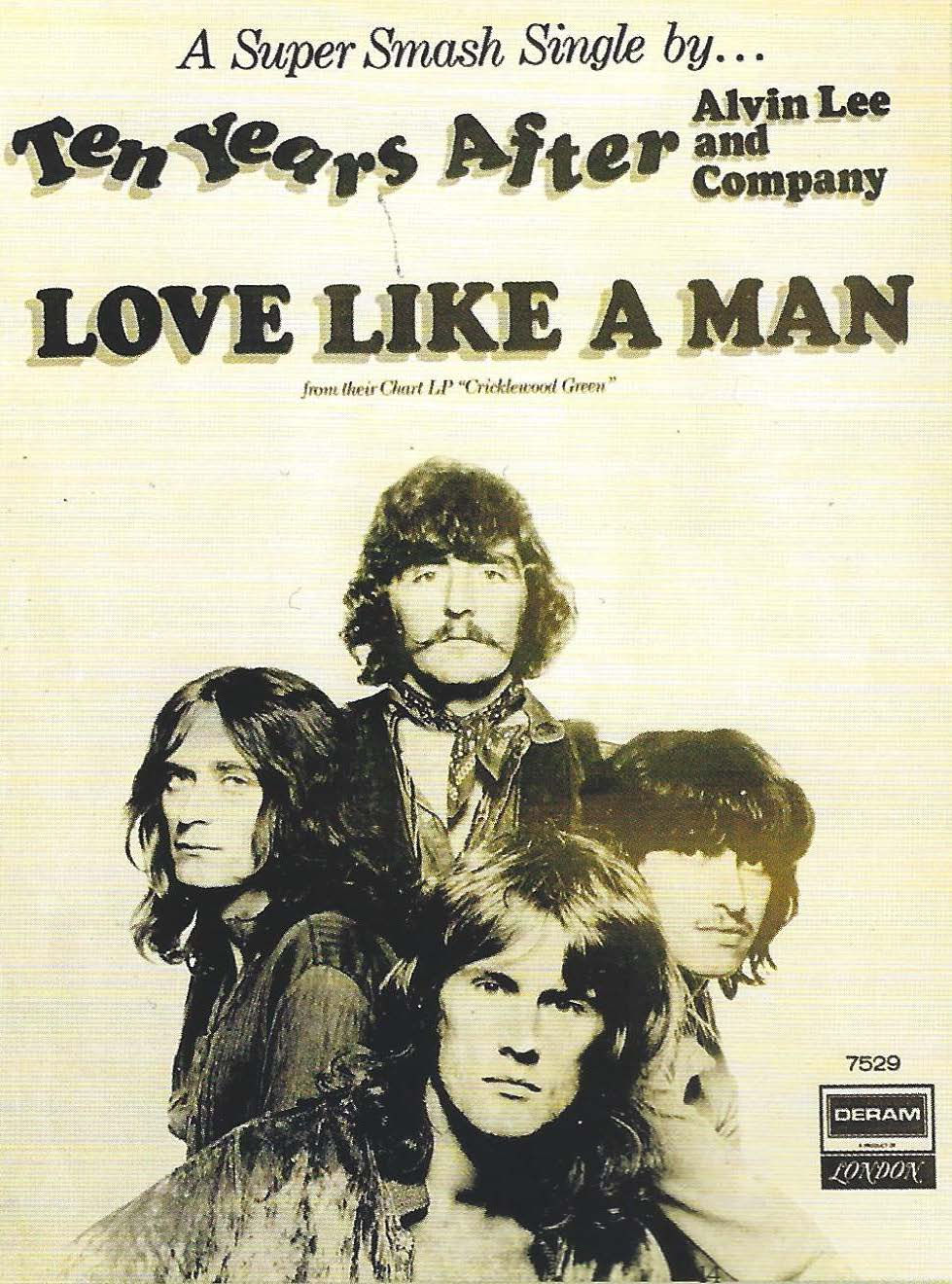
And just like that, Ten Years After welds listeners to their speakers or, better yet, to their headphones, by way of the scorching midsection of “Love Like a Man.” Then again, scorch is often the baseline for this titanic blues-rock band—either as part of simmer-scorch-simmer dynamics or just flat-out scorch.
The song’s stature stands in even sharper relief from being wedged between a (relatively) mannerly pair of bookends: the sleek and snappy jazz-blues of “Me And My Baby” and some gorgeous, semi-acoustic ponderings taken on by “Circles.” Both of them run four minutes apiece. The intervening hellraiser writhes for nearly eight.
If pressed for time, a radio-friendly version trimmed off four minutes. However, not even pruning that amount of the incensed guitar-led jam could keep ears from pricking up, as the abridged single climbed 1970’s charts in their homeland of England, across Europe as well as here in the States.
Thrill seekers need not worry, though. Because Cricklewood Green, the fourth studio album for Ten Years After, has no shortage of flashpoints beyond that Top 10 hit. Come on, their frontman could transform, at any instant, from the breakneck Alvin Lee into the blistering Captain Speed Fingers. A hair trigger was the only thing separating the fast-versus-insane fretsmanship of his two personas.
And it doesn’t take long for that switch to flip. You get an immediate sense of ultra-speed when “Sugar The Road,” the opening track, really guns it right before closing out. There is plenty more from where that came, especially given that Cricklewood Green’s freshly remastered and expansive Deluxe Version just about triples the LP’s original length.
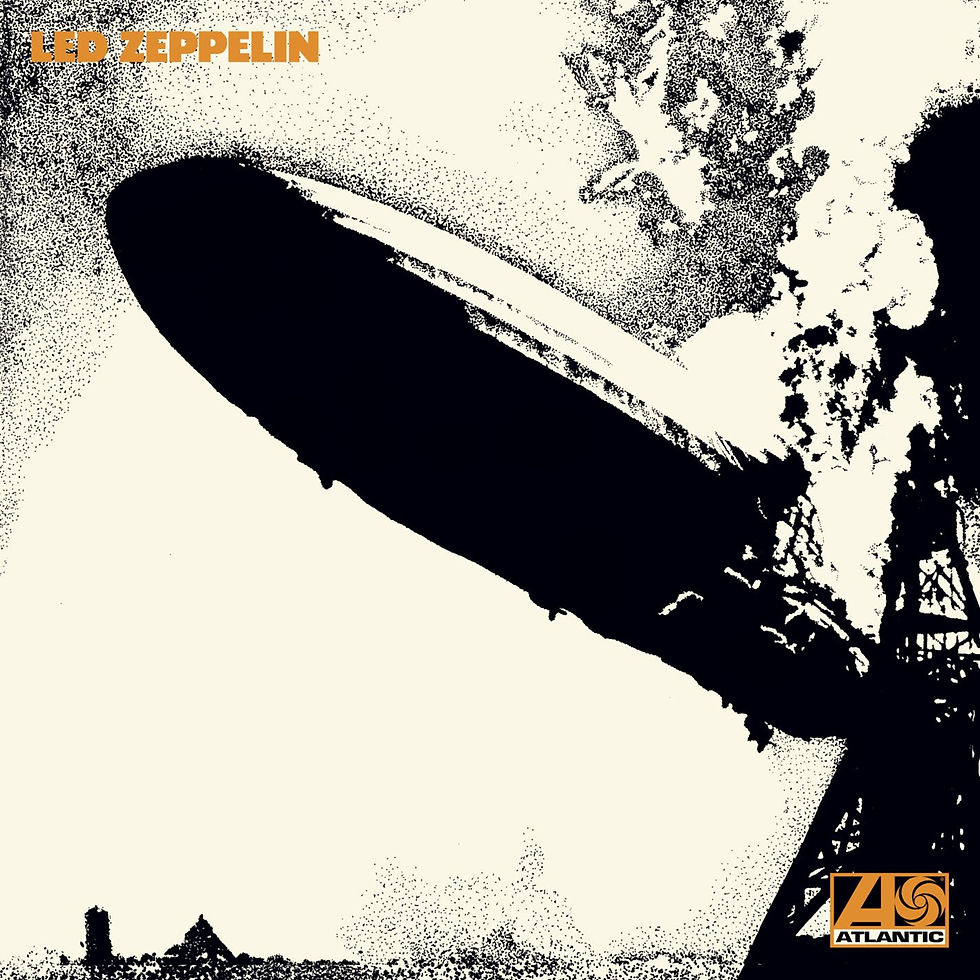
That LP came together over the course of 10 days in 1969. Upon returning from their wildly successful performance at the Woodstock festival in August—where they famously consumed Sunday’s 8:00-9:00 PM slot on the 17th—Ten Years After set up shop in London’s prestigious Olympic Studios, home to Beggars Banquet, Axis: Bold as Love, and Led Zeppelin. The eight songs demonstrate compositional latitude while very much maintaining the group’s blues-rocked identity. In addition to the aforesaid spring-loaded jazz (“Me And My Baby”) and dream-away balladry (“Circles”), there is yeehaw futuristic dystopia (“Year 3,000 Blues”) and hard galloping reined in only with every pass of its freeing chorus (“Working On the Road”).
Plus, there are opportunities to feed thy head.
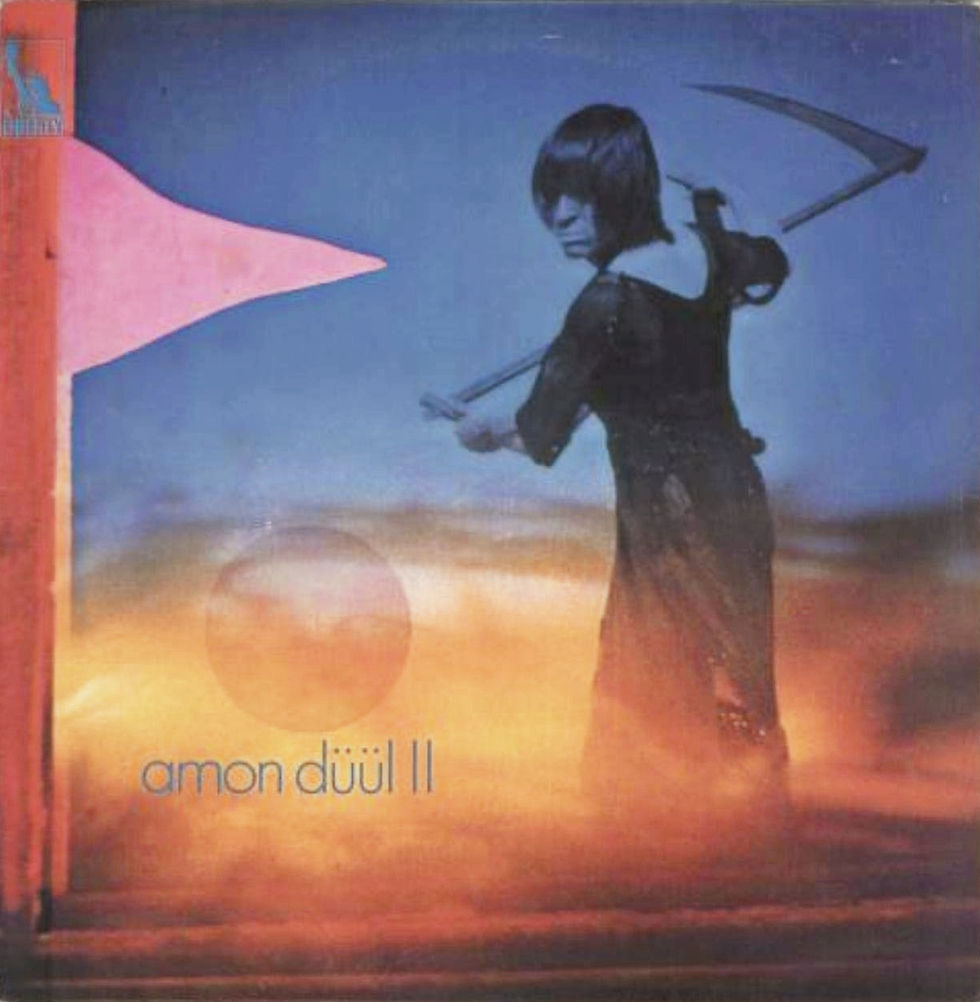
After all, it was 1970 when Cricklewood Green was released. Record shops were brimming that year with psychedelics of all flavors: Atom Heart Mother (Pink Floyd), Psychedelic Shack (The Temptations), Twelve Dreams of Dr. Sardonicus (Spirit), Electronic Meditation (Tangerine Dream), In the Wake of Poseidon (King Crimson), Bitches Brew (Miles Davis), Yeti (Amon Düül II). Not necessarily as lysergic, a percentage of the year’s LPs specifically bent blues for kaleidoscopic effect: Morrison Hotel (The Doors), Live Cream (Cream), and Band of Gypsys (Jimi Hendrix).
For its part, Cricklewood Green served as Ten Years After’s “head album.” Or so says Leo Lyons.

And he has a point. The title represents another of the band’s inside jokes, as did 1969’s doubleheader of Stonedhenge and a more cryptic Ssssh (quietly acknowledging the loudness of Lee’s guitar and Lyons’ bass). The joke being that Cricklewood is an area in London, while the Green component referenced a smokable, herbaceous crop that secretly grew in a garden there (seen posing on the album cover via one of the mantle’s photographs). In the studio, that widened consciousness equated to a stronger commitment to experimentation.
Such as the exploration of inner—rather than outer—space: “50,000 Miles Beneath My Brain.” Because if its title hadn’t already alerted you to the head trip ahead, then the harpsichord should. Other than sitar, what says ’60s psychedelia better than harpsichord? (Added cases in point include: “In Another Land,” “For Your Love,” “Mountains Of the Moon,” “Burning Of the Midnight Lamp,” “See Emily Play” and “Sunshine Superman.”) As Alvin lays surrealistic lines on you like “Can you pull me up to Jupiter when I'm all hung up on Mars?,” the urgency ratchets up with a cadence recalling the Rolling Stones’ “Sympathy For the Devil.” The music presses; it plows.
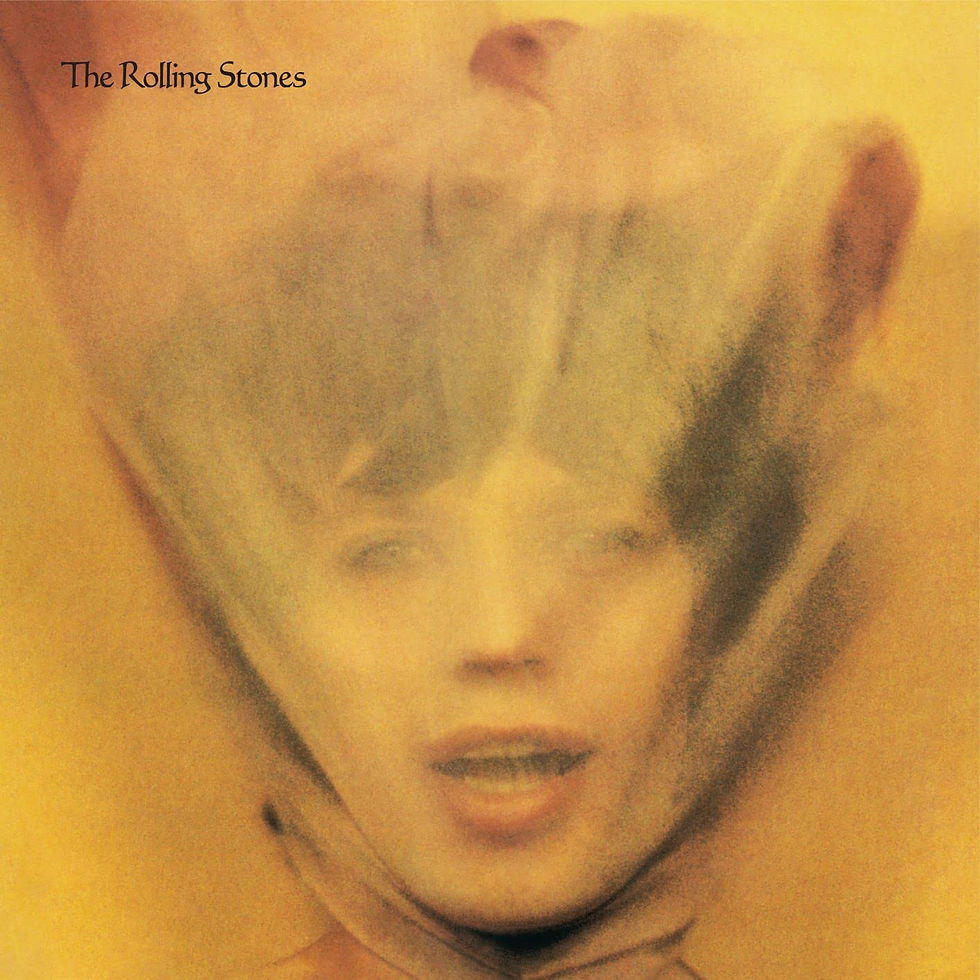
With assist from engineer Andy Johns (Goats Head Soup, As Safe as Yesterday Is, etc.), layers of trippy sound effects likewise slosh through “As the Sun Still Burns Away.” The bassline alone could trance out listeners with its doomful lope. However, the guitar’s abrasive tone keeps shocking you back to reality by cutting through the daze with the ease, and buzz, of a chainsaw. Aptly enough, this spacey voyage into the apocalypse fades to black on a blood-curdling scream.
The Deluxe Version keeps right on giving beyond the original LP’s eight tracks. “To No One” and the stomping “Warm Sun” were recorded during the Cricklewood Green sessions, yet left off the record. Both orphans now reunite with a newly uncovered, never heard rarity: “Cricklewood Jam.” On the surface, it’s only an instrumental demo lasting two-and-a-half minutes. But it’s also one of the prettiest snapshots of the band heard in delicate dialogue between Alvin’s relaxed fingerpicking and Chick’s gleaming piano lines. Rounding out the bonuses is “Love Like a Man,” being represented here thrice: the album version as well as the single version. Those two plus a live version.
Wait … live?
Correct. If good things come to those who wait, then extraordinary things reward those who fully go the distance. In this case, 56 years. That’s the span from today all the way back to the Friday night in February (the 27th, to be exact) when the band who lived to take the stage, did so. And nowhere better does the innate rock power of Ten Years After display than when gigging for crowds in the thousands, such as when peaking on their 1970 tour.
They came. They saw. They conquered. And, gratefully, they were recorded when New York’s Fillmore East took quite the pounding as soon as the emcee finishes announcing: “From England, Ten Years After.” For an exhilarating hour, their doozy of a second set roars for the first time since then, having sat idly on a shelf, having never been issued. The band’s long-standing allegiance to blues erupts while some of the new Cricklewood Green material gets tried out on the road—all much to the dismay of their gloriously brutalized instruments and amplifiers. But it’s ‘give the people what they want.’ Accordingly, the setlist’s seven songs never lack for force or for showmanship, making this every bit a spectacle to earwitness.
Expectedly, tension mounts quickly. Somehow, in the face of fearsome studio work, the stage managed to unlock an untapped reserve of supreme intensity. The velocity and stamina of Alvin’s bullet-fast guitar is undeniable. (That even includes the twoplus minutes of “Working On the Road.”) Roll in the coordinated thrust of Leo’s immense basslines and Ric Lee’s magnificently brutal drum violence (which will tucker out any air drummers bashing along), and then top with Chick’s keyboard embellishments. Live-action firepower in excelsis.
In case anyone missed out experiencing their famed Woodstock showstopper six months earlier, “I’m Going Home” returned at the Fillmore East. The 11-minute tornado that pulls in nods to Elvis, Jerry Lee Lewis, Carl Perkins and hyperactivity, created a twofer of 1950s rock-and-roll revisionism when detonated alongside Chuck Berry’s “Sweet Little Sixteen.”
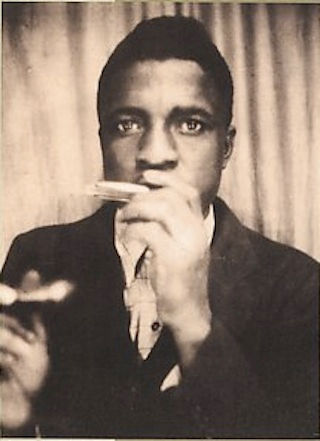
Allegiance to the blues openly bubbles up to the top, too. Compared to the breezy blueprint that harpist John Lee Williamson (Sonny Boy I) drew out in 1937 for “Good Morning, Little Schoolgirl,” Ten Years After’s super-heavy remake is something ferociously, and explicitly, new. Meet Captain Speed Fingers—for seven blinding minutes, rocketing up one side of the central jackhammered riff and down the other. But that’s not the only song here with a blue past. Blind Willie Johnson’s tear-stained template took three minutes; the Blues Project needed four and a half.
In the hands of Ten Years After, “I Can’t Keep From Crying Sometimes” refuses to vacate the stage for nearly 19 minutes.
Initially, things simmer calmly for two minutes until, on the guitar’s signal, the band heads out into rough, open waters. Momentum builds. Drums grow agitated. Lyrics quickly go by the wayside, as that red Gibson of Alvin’s breaks free of its leash. The exploratory jam has begun in earnest. At the 5:30 mark, freakout #1 arrives, shooting dissonant noises from out of the darkness. Seven minutes in, rebuilding starts again, as shards of Cream’s “Sunshine of Your Love” and Jimi Hendrix’s “Foxey Lady” whip past within the torrent.
We’re not even to the performance’s halfway point.
Then, after crescendo upon crescendo, the bottom drops out at nine-and-a-half minutes: Freakout #2 hits. This time is different. A martial drumbeat steadily pounds the way clear for industrial sounds to consume the landscape with their overwhelming mass. Once more, pressure mounts. Climbing, climbing, frantically climbing to the point, at minute 13, of blastoff. The comedown follows, restoring calmness as the main riff and vocals reappear, only to dissolve away into pin-drop silence—the sure sign we have returned safely to earth after 15 minutes. Not for long, though. Seconds later, re-ascent is feverishly back on, with Lee’s tortured shriek capping off blastoff #2. Eventually, energies do cool down enough for the final, feather-soft touchdown.
The majesty of Ten Years After on both the stage as well as in the studio affirms this double-disc set as the Deluxe Version of Cricklewood Green.
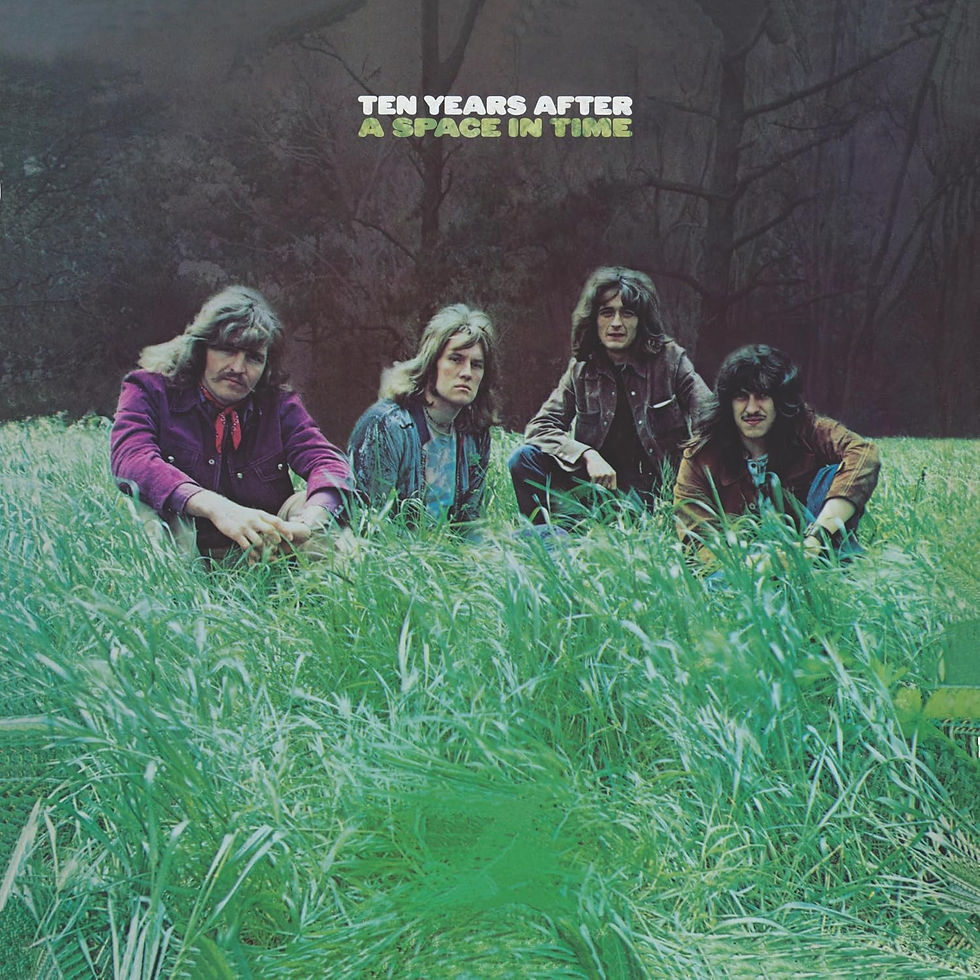
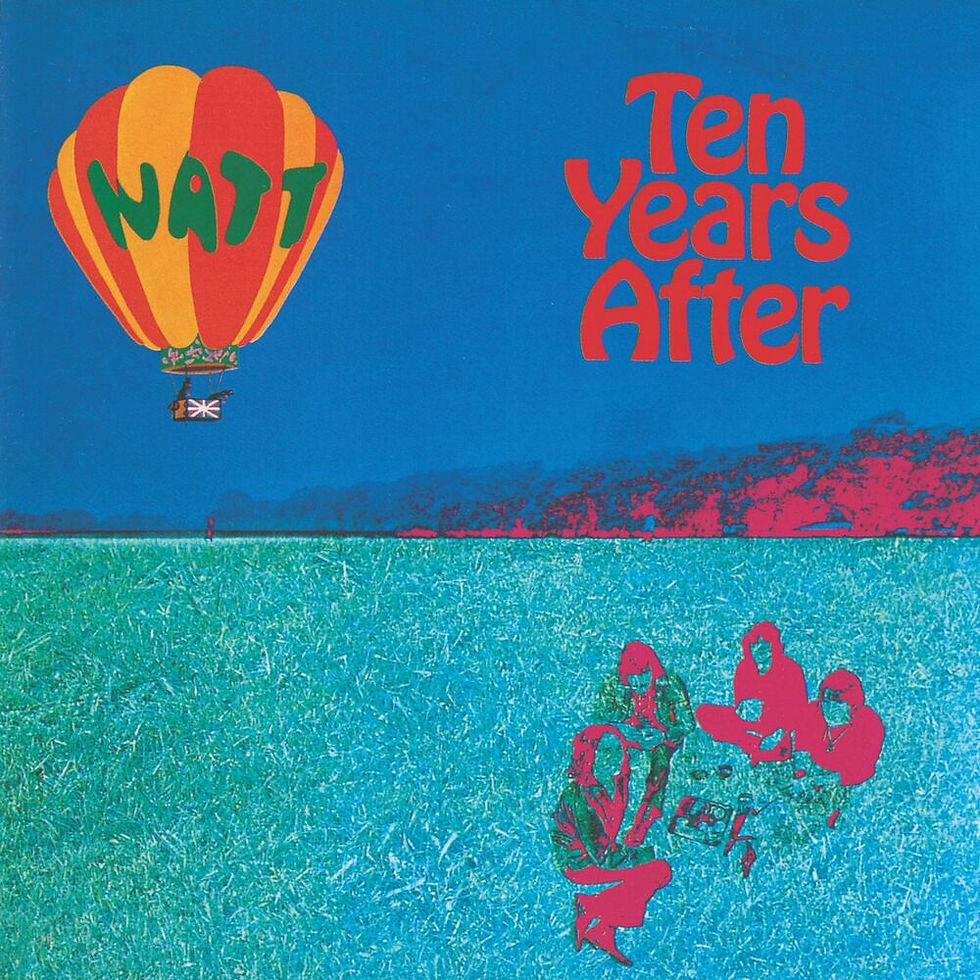
1970 turned out to be a fruitful, two-album year for the band. Eight months after this release in April, Watt would sneak in as a buzzer beater before year’s end. In the summer of ’71 would come A Space in Time: Side 1, Track 3 is where its kingmaker, blockbuster, firebreather lived. But that’s an album and a story for a different day.
Label: Chrysalis Records
Release date: 8/28/26
Artist website: Ten Years After.co.uk
Label website: Chrysalis Records.com
Reviewed by Dennis Rozanski


Comments